
Ilham Abidi is currently pursuing a Doctorate at IAV Hassan II in Morocco, where she focuses on "Introducing quinoa as a potential alternative crop in marginal environments." She holds a Master's and a Bachelor's degree in Agronomic Science from the same institution. Since 1994, Ilham has served as Chief Engineer at the Ministry of Agriculture, Fisheries, Rural Development, Water and Forests (ORMVAM), and she was appointed Head of the Agri-food Innovation Center in 2023. She is responsible for implementing sustainable and eco-resilient systems in Eastern Morocco under the Green Generation Strategy (2020-2030). A principal member of the PRIMA projects "Quinoa4Med" and "PureCircles," Ilham is also a founding member of the executive committee of the “Quinoa Arab Forum” and the founder of the “Sustainable Agriculture Forum Association” (ACADUR) in 2020. She is the focal expert for quinoa development in Eastern Morocco since 2019 and has organized the "International Day of Quinoa Consumption" in Morocco from 2020 to 2023. Additionally, her previous work has focused on enhancing smallholder farmer livelihoods through the Green Morocco Plan and empowering rural women through the National Initiative for Human Development.

Othman Alshaikh is a highly regarded expert in the fields of water resource management, rural development, and climate change adaptation, with over 20 years of experience working across Egypt and East Africa. Throughout his career, Othman has been dedicated to creating sustainable solutions that address the critical intersections between water security, rural livelihoods, and environmental resilience in the face of climate change.
Professional Focus
Othman's work primarily focuses on sustainable water management practices that ensure both agricultural productivity and ecosystem conservation. His expertise includes the design and implementation of integrated water management systems that optimize the use of natural resources in rural communities, particularly in regions vulnerable to water scarcity and climate impacts. This is evident in his PhD research on developing methods for strawberry production in the Eastern African Sahara region, a water-scarce environment.
In rural development, Othman has led multiple initiatives aimed at enhancing the livelihoods of smallholder farmers and rural populations through sustainable agricultural practices, improved water use efficiency, and infrastructure development. His work with GIZ as a Rural Institutional Development Advisor involved collaborating with governments, international organizations, and local communities to drive policy change and implement on-the-ground solutions that improve resilience to climate change. He has experience in strengthening farmer organizations and value chains, and promoting the participation of women and youth in leadership positions.
Climate Change Expertise
As a climate change specialist, Othman has played a crucial role in developing and promoting climate adaptation strategies that mitigate the impacts of rising temperatures and erratic weather patterns on water resources and agricultural systems. His work in arid areas and his focus on water resource management demonstrate his understanding of climate vulnerabilities. He has experience in teaching natural plant resources production in arid areas, including water resources management and pasture management.
Key Achievements
Led rural development programs in Upper Egypt, benefiting numerous communities by strengthening farmer organizations and improving value chain efficiency for agricultural production.
Designed and implemented training sessions and capacity building programs for farmer organizations in management, organizational structure, and financial sustainability.
Worked with GIZ, a German international cooperation organization, to promote climate-smart agricultural practices and sustainable development in rural communities.
Lectured on natural plant resources production in arid areas at Aswan University, sharing knowledge on water resource management and climate change adaptation.
Conducted research on sustainable agriculture and water resource management in arid environments, contributing to the understanding of climate change impacts on rural livelihoods.
Education and Affiliations
Othman holds a PhD in African Studies and Natural Resources from Cairo University, along with an MS in Natural Resources Management from the same institution. He also has a B.S. in Horticulture Sciences from Ain Shams University. He is an active member of the Egyptian Association for Sustainable Development (EASD) and potentially other professional organizations.

Dr. Belkhodja has been the coordinator of the Plant Production, Health, and Breeding area at CIHEAM Zaragoza since 1997. He holds a PhD from the University of Lleida, where he was awarded Best European PhD and Best PhD honors. A graduate of INAT (Tunisia), he also completed a Master’s in Plant Breeding at CIHEAM Zaragoza with Cum Maxima Laude honors. With over 18 international publications and an h-index of 10, he has worked as a professor in the UAE and regularly reviews for The Crop Journal.

Diplômé de l’Institut National Agronomique d’Alger en 1992, spécialiste en grandes culture, il rejoint l’exploitation familiale dans la région semi-aride de Zaghouan en Tunisie où il pratique la céréaliculture et l’élevage depuis plus de 30 ans. De 2004 à 2011 président de la fédération des éleveurs bovins de Tunisie, puis en 2011 fondateur du premier syndicat agricole indépendant Synagri. Président de L’APAD Association pour l’Agriculture Durable depuis 2019, co-signataire de l’initiative 4 pour 1000 pour la lutte contre la dégradation des sols et les changements climatiques depuis 2015.

Marion Comptour has a PhD in ethnoecology and is currently in charge of the NATAE (North African Transition to Agroecology) project at the NGO CARI. In particular, she leads the MEDAE network (MEDiterranean multi-actor network on AgroEcology).

Sheila Darmos is a third generation farmer and a social entrepreneur in the agri-food sector and civic engagement field in Greece.
Her key focuses lie within her lived physical and social environment, namely the farming and rural communities, and thus a systemic approach to enable transitions towards regeneration in a holistic way.
With a background in Sociology, she early was challenged to tap into her fathers legacy of a pioneer organic farmer in the early organic movement in Greece, while taking on the family business of producing organic artisanal fine foods sourced from small scale farmers of her region and exporting to a diverse set of clients all over Europe and beyond.
With this precious but at the same time troublesome insight into the rural context and challenges and into the international agri-food business, Sheila came soon to reinvent her own family business (Silver-leaf.gr) and the management style of it, while starting soon after the non-profit organisation The Southern Lights (thesouthernlights.org), to actively create solutions for those challenges.

Fouzia Delaite, a French-Moroccan, is involved in international solidarity in Morocco with the Association France et Maroc Au Coeur (AFEMAC), which she co-founded in 2011.
She has been AFEMAC's director since 2014, after working as a specialist educator with disabled children and teenagers for several years.
She designs and implements human development projects to improve the living conditions of rural families, particularly in the rural Commune of Mzouda, Chichaoua, Marrakech region.
She has a passion for ecology and educational farms in France and Morocco, the subject of her Master's research dissertation in social economy project engineering. This research inspired the association's projects.
Fouzia is very aware of the problem of water stress in Morocco. She promotes agro-ecology, a form of agriculture that respects people and their environment, to bring arid land back to life and ensure food self-sufficiency for rural families.
Fouzia Delaite, franco-marocaine, est engagée dans la solidarité internationale au Maroc avec l’Association France et Maroc Au Cœur (AFEMAC), qu’elle a co-fondée en 2011.
Elle est directrice d’AFEMAC depuis 2014, après avoir été éducatrice spécialisée auprès d’enfants et adolescents handicapés pendant plusieurs années.
Elle conçoit et met en oeuvre des projets de développement humain pour améliorer les conditions de vie des familles rurales, notamment dans la Commune rurale de Mzouda, Chichaoua, région de Marrakech.
Elle se passionne pour l’écologie et les fermes pédagogiques en France et au Maroc, objet de son mémoire de recherche de Master en ingénierie de projets d’économie sociale et solidaire. Ce travail de recherche a inspiré les projets de l’association.
Fouzia est très sensible à la problématique du stress hydrique au Maroc. Elle promeut l’agroécologie, une agriculture respectueuse de l’homme et de son environnement, pour redonner vie à des terres arides et assurer une autonomie alimentaire des familles rurales.

Mina Devkota is Senior Scientist (Agronomist) at the International Center for Agriculture Research for Dry Areas (ICARDA), based in Morocco. She has more than seventeen years of research and development experience in the field of soil and agronomy with a major focus on Resilient farming system intensification, crop diversification, conservation agriculture-based soil and crop management from different parts of the world (South and Central Asia, North Africa, and MENA region). Dr. Devkota has published over 100 scientific articles in high impact journals.

Mariem Dkhil is an agricultural engineer by training and a specialist in Sustainable Finance at Crédit Agricole du Maroc (CAM), a leading Moroccan bank in agricultural finance. She is one of the promoters of the inclusive and responsible financing approach. Her projects and achievements include setting up a social and environmental management system within the bank, developing new products and services for climate-smart agriculture, and formalising a gender policy.
As Head of South-South Cooperation, she is also involved in sharing the Bank's expertise with African financial institutions to improve the financing of small-scale farmers and facilitate the mobilisation of the investment needed to adapt African agriculture.
Previously, she helped set up Tamwil El Fellah, a CAM subsidiary that finances farmers excluded from traditional bank financing.
Mariem sits on the Board of Directors of the Fondation Crédit Agricole du Maroc pour le Développement Durable and represents CAM on the Board of Directors of AMIFA Sénégal, a microfinance institution that aims to facilitate access to finance for VSEs, with a particular focus on the agricultural sector. She is also a member of the Executive Committee of the African Rural and Agricultural Credit Association (AFRACA).
She graduated from AgroParisTech as an agricultural engineer and holds a Master's degree in Rural Development Economics from the University of Montpellier (France).
Mariem Dkhil est ingénieure agronome de formation et spécialiste en Finance Durable au sein du Crédit Agricole du Maroc (CAM), une banque marocaine de premier plan dans le financement agricole. Elle est l'une des promotrices de l'approche de financement inclusive et responsable. Ses projets et réalisations incluent la mise en place d'un système de gestion sociale et environnementale au sein de la banque, le développement de nouveaux produits et services pour l'agriculture intelligente face au climat, ainsi que la formalisation d’une politique genre.
En tant que responsable de la coopération Sud-Sud, elle est également engagée dans le partage de l'expertise de la banque avec les institutions financières africaines afin d'améliorer le financement des petits exploitants agricoles et faciliter la mobilisation des montants d'investissement nécessaire pour l'adaptation de l'agriculture africaine.
Auparavant, elle a contribué à la création de Tamwil El Fellah, une filiale de CAM qui finance les exploitants agricoles exclus du financement bancaire traditionnel.
Mariem siège au Conseil d'Administration de la Fondation Crédit Agricole du Maroc pour le Développement Durable et représente le CAM dans le Conseil d’Administration de AMIFA Sénégal, une institution de microfinance qui vise à faciliter l’accès au financement pour les TPE avec un focus particulier sur le secteur agricole. Elle fait également partie du Comité Exécutif de l'Association Africaine du Crédit Rural et Agricole (AFRACA).
Elle est diplômée de l'AgroParisTech en tant qu'ingénieure agronome et détient un Master en Économie du Développement Rural de l'Université de Montpellier (France).

Matthieu Dubernet heads Europe's leading group of independent oenology laboratories (Groupe Laboratoires Dubernet - Terra Mea) based in Languedoc and the Rhône Valley. He is an agricultural engineer from Agro Paris and holds a national diploma in oenology.
With more than 25 years' experience at the heart of the wine trade, winemaking, maturing, working and packaging, Matthieu Dubernet is a recognised consultant oenologist to many prestigious châteaux, estates, cooperatives and wine merchants in the Languedoc. A fine taster and blender, he is the architect of many cuvées. He acts as an expert consultant to major players in the wine industry in all the wine-growing regions of France and the world.
A court-registered expert since 2007, Matthieu Dubernet is also an expert in the French delegation to the International Organisation of Vine and Wine (OIV). He is the source of numerous innovations, scientific works and publications on oenological and agronomic analysis techniques, oenological practices, knowledge of wine composition and agro-environmental issues.
Matthieu Dubernet is a lecturer at the Faculty of Oenology, as well as at the Montpellier Sup'Agro school, and is also a regular speaker on the subject of oenological analysis techniques, phytosanitary residues, the physiology of vine nutrition, the functioning of vineyard soils, etc...
Initiator and promoter of the principle of Agro-oenology, he recalls as a leitmotiv that "the great wonder of wine is that it reflects the environment in which it is produced". In other words, taking sustainable action to improve the quality of the environment, the life of vine-growing soils, biodiversity and vine nutrition has a direct impact on wine quality. This is the direction in which he has been taking Laboratoires Dubernet for the last 10 years, with significant specific and innovative technical and scientific resources.
Born into a family of oenologists, Matthieu Dubernet is the third generation to write the history of Laboratoires Dubernet. He is the heir to a certain conception of humanist oenology, at the crossroads of culture, tradition, innovation, science, curiosity, discovery and always at the service of the truth and authenticity of wines.

Name & Surname: | Thierry DUPEUBLE |
Organisation: | CIHEAM Montpellier |
Role/Position: | Director |
Languages spoken: | French, English |
Contact email and mobile phone number: | dupeuble@iamm.fr / +33608282681 |
Thierry Dupeuble is an agronomist and doctor in economics. He is a specialist in public policies in favor of sustainable agriculture and rural development. He has supported development projects in the fields of organic farming and sustainable agriculture, on-farm transformation and selling, and rural tourism. Most of his experiences have been run in various positions within the ministry for agriculture in France. As such, he recently worked on the declination of the French national food policy at the regional level. Since 2021, he is the director of CIHEAM Montpellier.
Thierry Dupeuble est un agronome, docteur en économie. Il est spécialiste des politiques publiques en faveur de l’agriculture rurale et du développement rural. Il a travaillé sur de nombreux projets de développement de l’agriculture biologique, d’agroécologie, de transformation fermière des produits agricoles et de tourisme rural. Il a occupé diverses fonctions au sein du ministère français de l’agriculture. Récemment, il a notamment travaillé sur la déclinaison de la politique alimentaire nationale à l’échelon local. Depuis septembre 2021, il est directeur du CIHEAM Montpellier.

I am the regional director for the Méditerranean region for Cirad, and also the representative for INRAE and Agreenium. I am an agronomist trained in Montpellier, specialised in agricultural economics. I work in Cirad for almost 30 years. I have worked in many african countries included Morroco or,Tunisia on food consumption, food security of rural and urban households.

Ehssan El Meknassi Youssoufi is a senior agronomist and water resources specialist with over 30 years of experience in water management and irrigation. A graduate of Hassan II Agronomy and Veterinary Medicine Institute, she works as an independent consultant and expert for international organizations. She is also the Mediterranean Coordinator of COSTEA’s Scientific and Technical Committee for Agricultural Water.
Ehssan has contributed to key Moroccan strategies on water and agriculture, with expertise in integrated water resources management, irrigation project design, the gender approach in water, and wastewater reuse. Her career reflects a strong commitment to improving water resource management to support sustainable agriculture, in collaboration with national and international partners to address both current and future challenges.

Lhoussaine El Rhaffari
Function: PHD. Research Director in the R&D team for ‘Natural Resources Management and Exploitation’. Laboratory of Bioactive Health and Environment. Department of Biology, Faculty of Sciences Meknès. Moulay Ismaïl University.
Education provided: Cellular biology; General biology; General microbiology; Microbiology and environment; General ecology; Liquid and solid sanitation; Systematic, botanical and ethnobotanical; Valorization and preservation of terroir (local) products; Chemical Techniques for Biology; Sustainable management of ecosystems; Ecosystems: Human management and well-being; Quality Management Systems; Valorization of natural substances: from raw material to the marketable product (food products and cosmetics)
Areas of expertis: Integration of environmental and social aspects at the level of development projects; Sustainable territorial development; Valorisation of products and services of natural ecosystems and agro-ecosystems; Agroecological approach and conservation agriculture; Sustainable management of development projects; Development of income-generating activities; Integration of the products of terroirs and aromatic and medicinal plants in development projects. Development of food and cosmetics based on aromatic and medicinal plants.
Activities within the associative networks: Moroccan Biodiversity Association (AMAB) since 2008; Moroccan Society of Aromatic and Medicinal Plants (SOMAPAM) from 2006 to 2015; Slow Food since 2012; Network of Producers and Ecotourism Professionals (RESPPECT) since 2014; Association France Maroc au Cœur (AFEMAC) since 2014
Fonction: Professeur de l’Enseignement Supérieur. Directeur de Recherche à l’équipe de R&D ‘’Gestion et Valorisation des Ressources Naturelles’’. Laboratoire des Bioactives Santé et Environnement. Département de biologie, Faculté des Sciences Meknès. Université Moulay Ismaïl.
Enseignement R&D et Expérience: Disciplines fondamentales et techniques de Biologie ; Ecologie générale et Environnement ; Gestion durable des écosystèmes et agrosystèmes ; Valorisation de la qualité intrinsèque des plantes ;
Domaines d’expertise et consultation : Développement territorial durable ; Valorisation des produits et services des écosystèmes naturels et agroécosystèmes ; Approche agroécologique et Agriculture de conservation ; Développement des projets d’activités génératrices de revenus ; Intégration des filières des plantes aromatiques et médicinales et produits naturels dans les projets de développement.
Collaboration avec des réseaux associatifs nationaux et internationaux actifs dans les domaines suivants : Biodiversité ; Plantes Aromatiques et Médicinales ; Systèmes alimentaires ; Ecotourisme et Agritourisme ; Secrétaire Général Association France Maroc au Cœur (AFEMAC-Maroc)

Mostafa Errahj est un enseignant-chercheur au département d’Ingénierie de Développement de l'Ecole Nationale d'Agriculture de Meknès. Ses travaux de recherche portent sur l'agriculture familiale, l’action collective et coordinations locales et sur la gestion sociale des ressources en eau. Il est membre fondateur du réseau Sirma et co-animateur du DP-SIRMA, membre désigné du comité de programmes du Département Environnement et Sociétés du Cirad, membre du comité scientifique de la revue Cahiers d’Agriculture, et siège à l’assemblée générale du Réseau International de la Formation Agricole et Rural.

Dr. Jamal Hallam is a Moroccan soil scientist at the National Institute of Agricultural Research (INRA) in Morocco, based at the Regional Center for Agricultural Research in Agadir, where he also manages the soil-water-plant laboratory. His research explores the interactions between plant roots, soil physical properties including soil hydraulic functions, water stress, and soil fauna, all aimed at preserving soil health. His work includes research on soil salinity under innovative irrigation practices and alternative crops. Currently, he is particularly focused on assessing the potential of carbon sequestration in the Arganeraie Biosphere Reserve ecosystems and evaluating the CO2 balance in the argan oil sector.

Ainhoa Ihasusta: I graduated from Ecole Nationale de l'Aviation civile (ENAC) with a specialization in aerospace engineering. Then I did another master in the University Paul Sabatier in Toulouse to study the climate dynamic (SOAC : Science des océans, de l'atmosphère et du climat). The combination of my two formations led me to my current laboratory CESBIO (Centre d'études spatiale de la biosphère) where I am doing my PhD. I'm working on building a methodological framework, developing and testing a prototype for the monitoring of carbon budget components for croplands at high resolution and over large area. This work contributes to two Horizon Europe projects: ORCaSa (presented in this talk) and ClieNfarms.

Najla Kamergi is an agronomist and holds a PhD in agricultural economics. Before joining the EMWIS TU as a European project manager, she was a lecturer at the Human and Social Sciences Department of the Institut Agro Dijon. Her PhD thesis deals with the cross-country differences, determinants and trade effects of upstream and downstream agri-environmental regulations. Her research work is based on non-parametric and econometric approaches such as Data envelopment analysis, gravity modelling and network analysis. She has also participated in several projects conducted in the Mediterranean region, namely the evaluation of the Impact of Trade Chapters of the Euro-Mediterranean Association Agreements, the Euro-Mediterranean Agricultural trade & Environemental Policies (EuroMedatEpol) and Optimizing the Production of Goods and Services by Mediterranean forests in a context of global changes

Clémentine Lallier is Policy Officer for European & International Affairs directly to INRAE's Director General for Scientific Expertise and Policy Support. After studying European Relations and working in Brussels in both the public and private sectors (European Commission and European industrial clusters) on EU policies such as energy and food, she joined INRA in 2014. As European Affairs Officer, she worked on European programming by supporting the development of collaborative research projects. Since the creation of INRAE in January 2020, she has been developing strategic partnerships with international organisations working at the interface between science and policy.

Giuseppe Longo-Minnolo is postdoctoral researcher and lecturer at the Department of Agriculture, Food and Environment (Di3A) at the University of Catania, Italy. His research focuses on leveraging advanced remote and proximal sensing techniques, as well as alternative meteorological data sources, to enhance agricultural water management across various spatial scales.
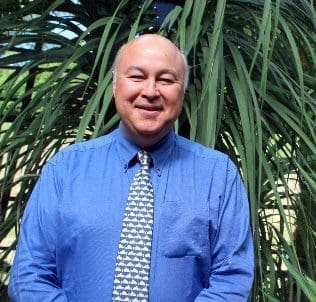
Dr. Paul LUU is an agronomist specialised in tropical agronomy, with degrees from AgroParisTech, the Institute of Tropical Zones and the University of Montpellier (PhD).
He started out in the field (6 years) in agricultural research projects (Saint Lucia, Sri Lanka and Tonga) before joining the international relations department of the French Ministry of Agriculture.
He was in charge (7 years) of relations with the FAO, the WB and the CGIAR, of bilateral relations with Africa and the Mediterranean, and of the management of French food aid (200,000 t of cereals per year).
He then spent 9 years developing agriculture in the French overseas territories as Technical Advisor for “Agriculture, Fisheries and Forestry” and as Director of ODEADOM.
In 2011, Paul LUU was appointed Director of Agropolis International (Montpellier – France) before joining the CGIAR Consortium in September 2013 as Liaison Officer with the French authorities, then as Protocol Officer.
Since September 2016, Paul LUU has been seconded by the French Ministry of Agriculture and Food as Executive Secretary of the international Initiative “4 per 1000: Soils for Food Security and Climate”, launched at the COP 21 in Paris.

Enrico Parisi graduated in Business Management from Bocconi University in Milan. He then moved to Rio de Janeiro where he worked at the Italian-Brazilian Chamber of Commerce. In 2016 he returned to Calabria to work in the family farm representing the fourth generation of producers of organic extra vergine olive oil.
In 2020 he received the honor of Knight of the Order of Merit from the President of Italian Republic, Mattarella.
In 2023 Enrico was elected national president of Coldiretti Giovani Impresa, in recognition of his tireless commitment to the association but also to his territory.

Marieme Seif-Ennasr is a young assistant professor in the Department of Natural Resources & Environment at the Hassan II Institute of Agronomy & Veterinary Medicine, Morocco. She holds an agronomist degree from IAV Hassan II and a PhD covering Geology, Geomatics, Hydrology, and Climate change, obtained from Ibn Zohr University. Before joining IAV Hassan II, she gained valuable experience as an auditor, focusing on Good Agricultural Practices. Her academic focus centers on soil chemistry and soil fertility research, where she endeavors to unravel soil properties intricacies and improve sustainable soil productivity optimization.
If you have any questions feel free to contact us at regional.meeting@4p1000.org!
Be sure to follow us on social media:


